
Your 7-day Japan route at a glance
Planning your first trip to Japan? Seven days is the sweet spot — long enough to experience Tokyo’s neon-lit energy, Kyoto’s serene temples, and Osaka’s legendary street food, without the exhaustion of trying to see everything. This isn’t a rushed checklist tour; it’s a carefully paced itinerary designed for first-timers who want to feel Japan, not just photograph it.
After helping thousands of travelers plan their Japan trips, we’ve learned what works and what doesn’t. This guide skips the fluff and focuses on the decisions you actually need to make: Which route to take, whether to get a JR Pass, where to find great food, and the mistakes that cost first-timers money and time.
The truth about 7 days in Japan
Seven days sounds short, but Japan’s efficiency makes it feel like two weeks anywhere else. Shinkansen trains connect cities in hours, not days. Stations have excellent food. Everything runs on time. You’ll see more in 7 days here than 14 days in most countries — if you plan it right.
Before you book: 5 decisions that shape your entire trip
Most first-timers rush to book flights before answering these questions. That’s a mistake. Your answers here determine everything from your route to your budget.
◈ Decision 1: When should you visit?
Japan has four distinct seasons, and choosing wrong can mean crowds, rain, or paying double for everything.
- October-November (fall): Our top pick for first-timers. Stunning autumn colors, comfortable 15-20°C weather, fewer crowds than spring, and prices 20-30% lower than cherry blossom season.
- Late March-early April (cherry blossom): Magical but chaotic. Book 4+ months ahead, expect 60-80% higher prices, and plan for crowds everywhere.
- May-June: Pleasant weather, fewer tourists, but June brings rainy season (tsuyu). Budget-friendly option if you can handle occasional rain.
- September: Best value month. Warm weather, minimal crowds, lowest flight prices.
- Avoid: Late July-August (brutal humidity), Golden Week (late April-early May), and New Year period (most expensive).
◈ Decision 2: Fly into Tokyo or Osaka?
This choice affects your entire route and budget.
- Tokyo → Osaka (recommended): More international flight options, natural progression from modern to traditional, no backtracking required.
- Osaka → Tokyo: Sometimes cheaper if you find one-way deals, but fewer direct international flights.
- Round-trip Tokyo: Costs more in transport (Shinkansen both ways) and wastes half a day returning. Only choose if flight prices differ significantly.
◈ Decision 3: Do you need the JR Pass?
Short answer: Yes, for this itinerary.
The 7-day JR Pass costs $280 (¥33,610). A single Tokyo-Kyoto Shinkansen ticket costs $130 (¥13,970) one-way. Since you’re traveling Tokyo → Kyoto → Osaka plus using JR trains within cities, the pass saves you $80-150.
Critical tip: Activate your JR Pass on Day 4 (when you leave Tokyo), not Day 1. Tokyo has its own metro system, so you don’t need the pass while staying there.
◈ Decision 4: Hotels or ryokans?
First-timers often book all hotels and miss the ryokan experience entirely.
- Tokyo: Book a modern hotel. Ryokans here are overpriced tourist traps.
- Kyoto: Book one night in a ryokan (traditional inn). It’s worth the splurge — tatami rooms, futon beds, communal baths, kaiseki dinner. Budget $180-300 for one night.
- Osaka: Back to hotels. You’re here for food, not ambiance.
◈ Decision 5: How much Japanese do you need?
None. Seriously. Japan is remarkably navigable without Japanese. Google Translate’s camera feature reads menus and signs. Train stations have English. Hotels speak English. Learn “arigatou” (thank you) and “sumimasen” (excuse me) and you’re set.
Why Tokyo → Kyoto → Osaka is the perfect first-timer route
We’ve tested dozens of 7-day Japan routes. Here’s why this one wins for first-timers:
This route works because:
- Most international flights land in Tokyo — easier logistics on arrival day when you’re jet-lagged
- Natural progression: Modern Japan (Tokyo) → Traditional Japan (Kyoto) → Food paradise (Osaka)
- JR Pass maximized: Activate Day 4, use it heavily for 7 days straight
- No backtracking: Linear route saves time and money
- Osaka airport is closer to the city than Narita is to Tokyo — easier departure
- Ends with the best street food in Japan — perfect finale

Days 1-3: Tokyo — Where Japan blows your mind
Tokyo is sensory overload in the best way. Your first three days here set the tone for everything that follows. We’ve structured these days to ease you into Japan while hitting the essential experiences.
◈ Day 1 tips
- Get a Suica/Pasmo IC card at the airport — tap and go for all trains, convenience stores, vending machines
- Konbini stores (7-Eleven, Lawson, Family Mart) are lifesavers with excellent ready-to-eat meals
- Don’t plan too much today — jet lag is real, and Tokyo will still be there tomorrow
◈ Day 2 tips
- Senso-ji is best before 9 AM or after 5 PM — midday is brutal with tour groups
- Akihabara deals: Tax-free shopping for purchases over ¥5,000. Bring passport
- Tokyo Metro 24-hour pass ($7) saves money if you’re moving between areas a lot
◈ Day 3 tips
- teamLab tickets sell out. Book at teamlab.art 2-3 weeks before your trip
- Wear clothes you can remove easily at teamLab — you wade through knee-deep water
- Pack your bags tonight. Tomorrow you leave for Kyoto early
Days 4-5: Kyoto — Where time slows down
The contrast from Tokyo to Kyoto is intentional. After three days of sensory overload, you need Kyoto’s quiet temples, bamboo groves, and geisha districts. This is Japan’s cultural heart, and it deserves your full attention.
◈ Getting to Kyoto
Activate your JR Pass today. Take the Shinkansen (bullet train) from Tokyo Station to Kyoto Station. The Hikari train takes 2h 40m (covered by JR Pass). Trains depart every 10-15 minutes. No reservation needed for unreserved cars.

◈ Day 4 tips
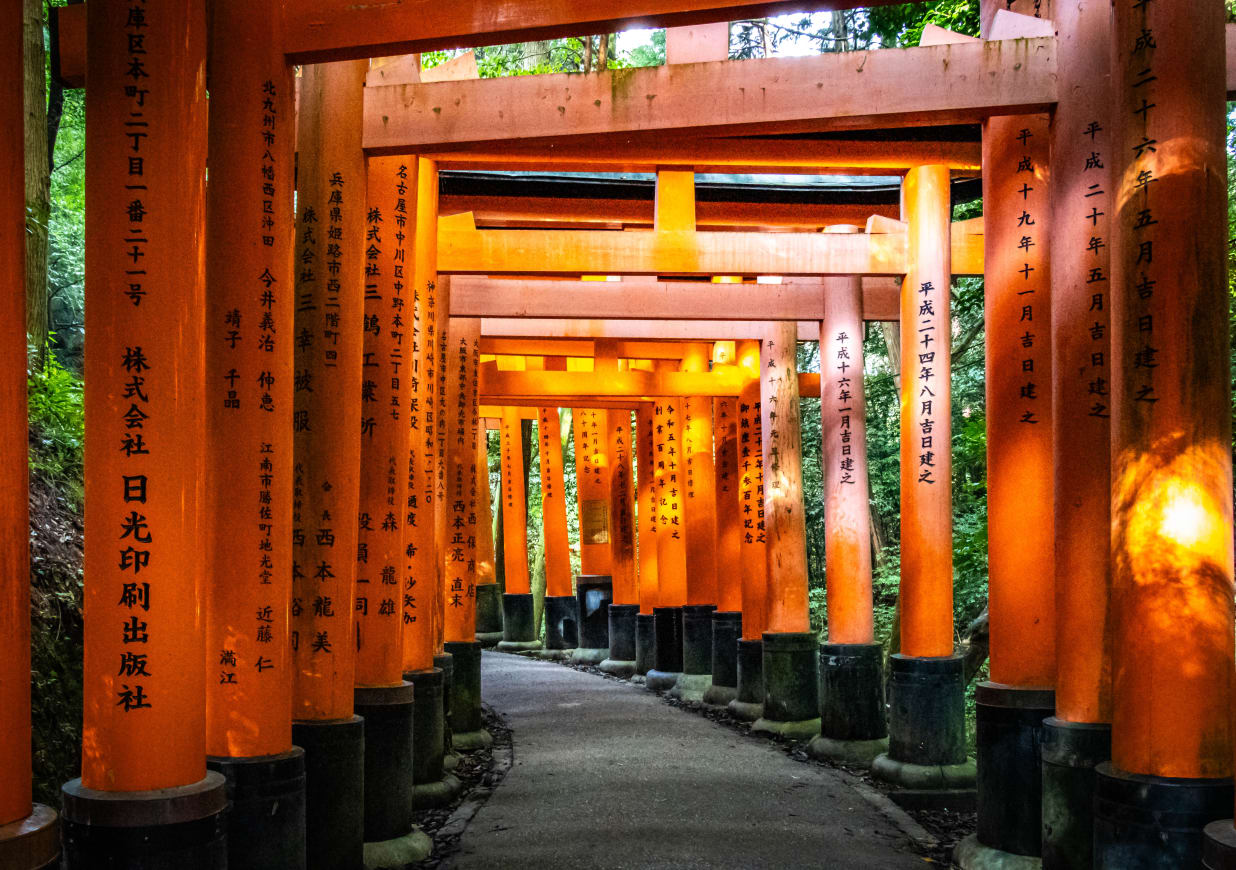
- Fushimi Inari is 24/7 and free. Evening visits are magical with fewer people
- The gates have donor names written on the back — corporations pay over $4,000 for the large ones
- Gion is a residential area. Respect the geiko/maiko — don’t chase them for photos
◈ Day 5 tips
- Bamboo Grove reality check: It’s stunning but tiny. The Instagram photos use telephoto lenses and arrive at 6 AM
- Rent bikes in Arashiyama — the area is spread out and cycling is more efficient than buses
- Nishiki Market closes around 6 PM. Many shops close earlier. Don’t go late
Days 6-7: Osaka — Eat everything
Osaka’s motto is “kuidaore” — eat until you drop. After Kyoto’s refinement, Osaka’s brash energy is refreshing. The food here is cheaper, portions are bigger, and locals are friendlier. This is where you eat your heart out guilt-free.
◈ Kyoto to Osaka
Quick 15-minute Shinkansen or 30-minute JR Special Rapid (both covered by JR Pass). Hotels near Namba/Dotonbori area are best for first-timers.
◈ Day 6 tips
- Nara deer warning: They can be aggressive. Keep food hidden until ready to feed. Don’t run — they’ll chase
- In Dotonbori, follow the queues. If locals are lining up, the food is good
- Most Dotonbori restaurants have English menus with pictures
◈ Day 7 tips
- Osaka Castle grounds are free. Only the museum inside costs money ($7). Skip it if rushed
- Don’t check bags at hotel after checkout. Use station lockers ($3-8) for flexibility
- Kansai Airport has excellent last-minute souvenir shops airside

Complete budget breakdown: How much does 7 days in Japan cost?
Here’s the honest breakdown — no unrealistic “budget travel” claims that require you to skip meals.
| Category | Budget | Mid-range | Comfort |
|---|---|---|---|
| Flights (return) | $500 | $800 | $1,200 |
| Accommodation (6 nights) | $300 | $540 | $900 |
| JR Pass (7-day) | $280 | $280 | $280 |
| Local transport | $35 | $55 | $75 |
| Food (7 days) | $175 | $280 | $450 |
| Activities & entry fees | $60 | $120 | $250 |
| Pocket WiFi/SIM | $18 | $18 | $25 |
| Souvenirs & shopping | $60 | $180 | $350 |
| Travel insurance | $20 | $35 | $50 |
| Total per person | $1,448 | $2,308 | $3,580 |
◈ How to save $200-400
- Book flights in February/September — 30-40% cheaper than peak seasons
- Stay in business hotels — $50-70/night, clean private rooms, often better than hostels
- Eat konbini breakfast — $4-5 for a filling meal from 7-Eleven
- Walk more — Japanese cities are very walkable, saves transport costs
- Use tax-free shopping — Show passport for purchases over ¥5,000
JR Pass: Is it worth it and when to activate?
The JR Pass is the most confusing part of Japan trip planning. Here’s everything you need to know:
◈ JR Pass verdict for 7-day Tokyo-Kyoto-Osaka trip
Yes, get it. The 7-day pass ($280) pays for itself with just the Tokyo-Kyoto-Osaka Shinkansen legs. Plus you get unlimited JR trains within cities.
JR Pass math breakdown
| Journey | Without JR Pass | With JR Pass |
|---|---|---|
| Tokyo → Kyoto (Shinkansen) | $130 | Included |
| Kyoto → Osaka (Shinkansen) | $26 | Included |
| Osaka → Nara (round trip) | $15 | Included |
| Local JR trains (estimated) | $35 | Included |
| Narita Express (if activated) | $30 | Included |
| Total | $236+ | $280 |
◈ Critical JR Pass tips
- Don’t activate on day 1. Tokyo uses separate metro systems (not JR). Activate on day 4 when you take the Shinkansen to Kyoto
- JR Pass doesn’t cover Nozomi/Mizuho trains. Take Hikari instead (10-15 mins slower, still fast)
- Buy before you arrive. Must purchase outside Japan. Order online, pick up at airport
- Activation ≠ purchase date. You choose when to activate (within 30 days of exchange)
10 mistakes first-timers make (and how to avoid them)
We’ve seen these mistakes derail trips. Don’t be that traveler.
Practical tips you actually need
◈ Food guide
Japan has options for every dietary preference, but it helps to know what to look for.
- Konbini (convenience stores): 7-Eleven, Lawson, Family Mart have excellent ready-to-eat meals. Onigiri, sandwiches, bento boxes, fresh fruit
- Ramen: Ichiran lets you customize everything. Many shops have picture menus
- Conveyor belt sushi: Point at what you want. Color-coded plates show prices
- For vegetarians: Look for “yasai” (vegetable) dishes. Shojin ryori in Kyoto is entirely plant-based Buddhist cuisine. CoCo Ichibanya curry is customizable
- For allergies: Google Translate camera mode reads ingredient lists instantly
- Halal options: Growing availability in major cities. HalalNavi app helps locate restaurants
◈ Money matters
- Currency: Japanese Yen (¥). $1 ≈ ¥150 (rates fluctuate)
- Cards: Visa/Mastercard widely accepted. Amex less common
- Cash: Still needed for small shops, some restaurants, temple donations. Carry ¥15,000-25,000
- ATMs: 7-Eleven ATMs accept international cards. Airport exchange rates are fair
- IC cards: Suica/Pasmo — rechargeable cards for trains, buses, convenience stores. Get at airport
◈ Staying connected
- Pocket WiFi: Best for groups. Rent at airport ($5-7/day)
- SIM card: Better for solo travelers. Available at airports and electronics stores
- eSIM: Airalo, Holafly work well. Activate before landing
◈ Other essentials
- Power plugs: Type A (two flat pins, same as USA). Many countries need adapters
- Tipping: Don’t tip. Ever. It’s considered rude in Japan
- Trash: No public bins. Carry a small bag until you find a konbini
- Toilets: The best in the world. Heated seats, bidets, music. Don’t be afraid of the buttons
- Shoes: You’ll remove them frequently. Slip-ons are practical
Frequently asked questions
Yes, 7 days is ideal for a first trip to Japan. You can comfortably cover Tokyo (3 days), Kyoto (2 days), and Osaka (1-2 days). Japan’s efficient transport means you maximize every day without feeling rushed.
The ideal route is: Days 1-3 in Tokyo (Shibuya, Senso-ji, Akihabara, teamLab), Day 4 travel to Kyoto via Shinkansen, Days 4-5 in Kyoto (Fushimi Inari, Arashiyama, Gion), Days 6-7 in Osaka (Dotonbori, Osaka Castle, day trip to Nara), then fly home from Osaka.
A 7-day Japan trip costs $1,500-$3,500 per person including flights ($500-$1,200), accommodation ($300-$900), JR Pass ($280), food ($175-$450), and activities ($60-$250). Budget travelers can manage at $1,500; comfortable mid-range is around $2,300.
Yes, a 7-day JR Pass ($280) is essential if traveling Tokyo-Kyoto-Osaka. The Tokyo-Kyoto Shinkansen alone costs $130 one-way, so the pass pays for itself. Activate it on Day 4 when you leave Tokyo for maximum value.
For first-timers, October-November (fall foliage) or late March-early April (cherry blossoms) offer the most magical experience. September and May are budget-friendly alternatives with pleasant weather and fewer crowds.
Fly into Tokyo, out of Osaka. Most international flights land in Tokyo, and this route lets you travel linearly without backtracking. Flying round-trip to Tokyo wastes half a day returning and costs more in Shinkansen fares.
No. Japan is remarkably navigable without Japanese. Train stations have English, Google Translate reads menus, and hotel staff speak English. Learn “arigatou” (thank you) and “sumimasen” (excuse me) — locals appreciate any effort.
Activate on Day 4, when you take the Shinkansen from Tokyo to Kyoto. Don’t activate on Day 1 — Tokyo uses separate metro systems not covered by JR Pass, so you’d waste 3 days. The pass is valid for 7 consecutive days from activation.
It’s beautiful but overhyped. The grove is small, and by 9 AM it’s packed with tourists. If you go, arrive by 7 AM. Otherwise, consider skipping it — Fushimi Inari is more impressive and less crowded.
Absolutely yes. teamLab Planets sells out 2-3 weeks ahead, especially for weekends and evenings. Book at teamlab.art immediately after confirming your travel dates.
Haneda is closer to Tokyo (15km vs 60km) and cheaper to reach. Narita has more international flights. If prices are similar, choose Haneda. The Narita Express adds 90 minutes but is covered by JR Pass if activated.
Yes, for at least one night in Kyoto. The ryokan experience — tatami rooms, futon beds, communal baths, kaiseki dinner — is quintessentially Japanese. Budget $180-300 for one night. Skip ryokans in Tokyo and Osaka.
Carry ¥15,000-25,000 ($100-170) in cash. Japan has moved significantly toward cashless payments — IC cards and credit cards work almost everywhere. Cash is still needed for small shops, some restaurants, and temple donations.
IC cards (Suica/Pasmo) are rechargeable smart cards for trains, buses, convenience stores, and vending machines. Essential for Japan travel. Get one at the airport (¥500 deposit + balance). Tap and go — no buying individual tickets.
Extremely. Japan consistently ranks among the world’s safest countries. Solo travelers can walk alone at night without concern. Theft is rare, people are helpful, and getting lost is the worst that’ll happen.
Japan has options for most diets with some preparation. Vegetarians should look for “yasai” dishes and shojin ryori (Buddhist cuisine). Use Google Translate’s camera for ingredient lists. HalalNavi app helps find halal restaurants. Konbini stores have clearly labeled options.
No. Never tip in Japan — it’s considered rude or confusing. Service is included in all prices. If you leave money on the table, staff will chase you to return it.
Essential: Google Maps (download offline maps), Google Translate (camera mode for menus), Hyperdia or Japan Transit (train schedules). Useful: Tabelog (restaurant reviews), PayPay (mobile payments).
Japan has four distinct seasons. Spring (Mar-May): 10-20°C. Summer (Jun-Aug): 25-35°C, humid. Fall (Sep-Nov): 15-25°C, gorgeous. Winter (Dec-Feb): 0-10°C, cold but manageable. Pack layers regardless of season.
Absolutely. Osaka has Japan’s best street food (takoyaki, okonomiyaki), a more relaxed vibe than Tokyo, and easy access to Nara’s deer park. Plus, flying out of Osaka saves you backtracking to Tokyo.
With 10 days, add either: Hiroshima day trip (Peace Memorial, Miyajima Island), extra day in Tokyo for DisneySea or Hakone/Mt. Fuji area, or simply a slower pace. The 7-day JR Pass still works; use IC cards for extra days.
Japan uses Type A plugs (two flat pins, same as USA). If you’re from Europe, UK, Australia, or most of Asia, you’ll need an adapter. Voltage is 100V — phone chargers work fine, but some appliances may not.
From Narita: Narita Express to major stations (90 mins, $30 or JR Pass). From Haneda: Monorail or Keikyu line (30 mins, $6-8). Get pocket WiFi first, then use Google Maps for exact directions.
Narita (NRT) is 60km from Tokyo, handles most international flights, and takes 90 mins to reach the city. Haneda (HND) is only 15km from central Tokyo, saves time on transfers, but has fewer international routes. Choose based on flight availability and price.
Pack light — you’ll walk 15,000+ steps daily. Essentials: comfortable walking shoes, slip-on shoes for temples, light jacket (evenings are cool), umbrella, universal power adapter. Skip heavy toiletries — Japanese drugstores are excellent.
Stop juggling 15 browser tabs.
Plan your entire Japan trip in one place.
Rimigo brings together flights, hotels, JR Pass, itineraries, and local experiences — all personalized for you. No more scattered bookings. No more guesswork.


